Contents
Here's a fact that genuinely reframes what "AI" means: a chip smaller than a postage stamp can spot a hairline crack in a metal bracket, classify it, and trigger an alert in 4 milliseconds — with the internet never involved once. No cloud round-trip, no GPU cluster, no server anywhere in the picture. Just a tiny model running directly on the hardware that's already looking at the crack.
I find this genuinely refreshing to write about after a run of GPU-hungry topics — edge AI is the opposite instinct. Instead of "how much compute can I throw at this," it's "how little can I get away with and still work." That constraint turns out to be a genuinely interesting engineering discipline in its own right, not just a limitation to tolerate.
By the end of this guide, you'll understand what edge AI actually is, why it exists as its own field rather than just "small cloud AI," and the practical path to deploying your first model on real hardware. IMO, there's something satisfying about a model so small it fits in kilobytes, not gigabytes :)
What Edge AI Actually Means
Edge AI is the practice of running machine learning inference directly on a local device — a microcontroller, a single-board computer, or a dedicated AI accelerator — rather than sending data to a remote server for processing. The model lives on the hardware; predictions happen locally, in real time, with no network dependency at all.
This is distinct from cloud AI, where your data travels to a server, inference runs there, and results come back over the network. It's also distinct from training, which still overwhelmingly happens in the cloud on powerful GPUs — edge AI specifically concerns the inference step, applying an already-trained model to new data on-device. Your phone does this constantly — face recognition, noise-canceling earbuds, a car's lane departure warning — all genuinely edge AI, even though nobody markets it with that label. Ever wondered why your earbuds can cancel noise instantly with zero perceptible lag? That's edge AI working exactly as intended — there's no time budget for a round trip to a server, so the inference has to happen locally, immediately.
Our GPU setups guide covers where training compute lives — understanding that training happens in the cloud while inference can happen at the edge makes the full pipeline feel coherent rather than fragmented.
TinyML: The Field Within the Field
If edge AI is the broad umbrella, TinyML is its most extreme, most resource-constrained corner — machine learning specifically on microcontrollers with kilobytes, not gigabytes, of memory to work with.
The founding community, originally called the TinyML Foundation, rebranded to the Edge AI Foundation at the end of 2024 — a signal that the field expanded beyond pure microcontrollers into a broader continuum of edge hardware, from deeply embedded sensors up to more capable edge processors. TinyML models can genuinely be under 50KB, running on modest ARM Cortex-M4 microcontrollers, detecting things like bearing wear patterns from vibration sensors running on coin cell batteries for months at a time. The field has moved past demos and conference talks. Professional tools, established workflows, and real shipped products now exist — this is genuinely production engineering, not a novelty anymore. This progress has been steady rather than headline-grabbing — nothing like the visibility large language models get — but the embedded industry has been quietly, consistently adopting this to solve genuinely practical problems.
Our robotics kits guide covers Arduino and Raspberry Pi hardware — understanding those platforms makes TinyML's hardware requirements feel familiar rather than abstract.
Why Run AI at the Edge At All?
Three concrete advantages explain why this field exists rather than everyone just calling a cloud API.
Near-zero latency. No network round trip means predictions happen in single-digit milliseconds — genuinely necessary for anything reacting to the physical world in real time, like a lane-departure warning or an industrial safety trigger. Privacy. Data never leaves the device at all — for some deployments (federal facilities, medical devices, anything genuinely sensitive), this isn't a nice-to-have, it's a hard requirement that makes cloud AI a non-starter regardless of accuracy tradeoffs. Offline operation. The device works in genuinely disconnected environments — remote industrial sites, wildlife cameras with no cellular coverage, anywhere internet simply isn't reliably available.
These three benefits explain the entire reason edge AI is worth the extra engineering effort — you're trading model size and complexity for capabilities cloud AI structurally cannot offer, no matter how good the connection.
Our sim-to-real transfer article covers deployment challenges that edge AI addresses directly — understanding the latency and privacy constraints makes edge deployment feel like a natural engineering decision rather than a niche choice.
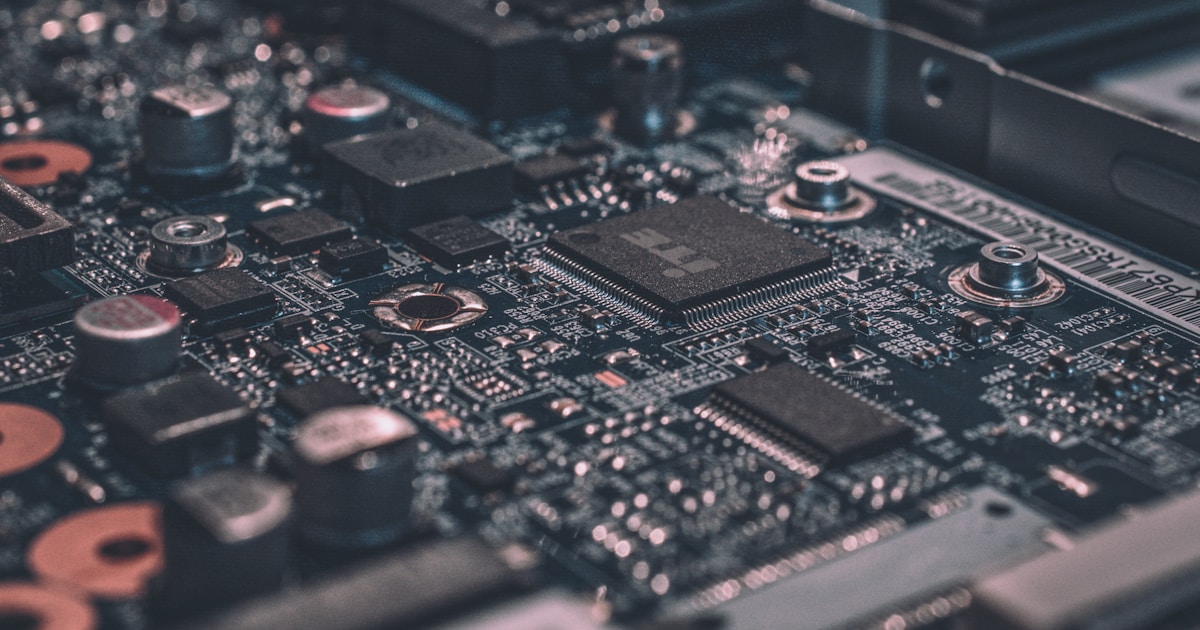
Figure 1: Edge AI runs inference directly on local hardware — from microcontrollers to single-board computers — with no cloud dependency, enabling single-digit millisecond predictions
The Hardware Spectrum: Matching Device to Task
Edge AI spans a genuinely wide range of hardware, and picking the right tier matters enormously for what's actually achievable.
Microcontrollers (ESP32, Arduino Nano 33 BLE, STM32) — kilobytes of memory, running genuinely tiny models for keyword detection, simple anomaly detection, or basic sensor classification. This is TinyML's home turf. Raspberry Pi and similar single-board computers — dramatically more capable, able to run meaningfully larger models, real computer vision pipelines, and even light fine-tuning workloads. Dedicated edge AI accelerators (NVIDIA Jetson, Google Coral) — purpose-built for running larger neural networks efficiently at the edge, striking a middle ground between microcontroller constraints and full server-class compute.
Different hardware for different scales, genuinely — a keyword-spotting model that fits comfortably on a €35 microcontroller board would be a poor fit for a Jetson, and a real-time object detector running at 30fps needs compute a microcontroller simply cannot provide.
Our robotics kits guide covers the Arduino-vs-Pi decision from a robotics perspective — understanding that same hardware spectrum from an edge AI angle makes both articles reinforce each other.
The Core Technique: Quantization
Here's the specific engineering trick that makes squeezing a neural network onto kilobytes of memory possible at all: quantization — reducing the numerical precision of a model's weights, typically from 32-bit floating point down to 8-bit integers.
INT8 quantization typically costs 0.5% to 3% accuracy, depending on the model architecture and task — a genuinely reasonable tradeoff for the dramatic size and speed improvements gained. Quantization-aware training — where the model is trained with quantization effects simulated from the start, rather than quantized only after full-precision training — generally preserves more accuracy than quantizing an already-trained model as an afterthought. This single technique is doing most of the heavy lifting that makes TinyML possible at all — without it, even a genuinely small neural network wouldn't fit in a microcontroller's memory budget. Some carefully designed models lose almost no accuracy from quantization, while poorly suited architectures can lose considerably more — this is exactly the kind of thing worth testing empirically on your specific model rather than assuming a blanket accuracy cost upfront.
Our GPU setups guide covers training compute requirements — understanding that training stays GPU-bound while inference gets quantized for edge deployment makes the full workflow feel logical.
The Software Stack: Where to Actually Start
Two main paths exist for getting your first model onto real hardware, and they trade off convenience against control.
Edge Impulse: The Accessible On-Ramp
Edge Impulse has emerged as the most accessible platform for TinyML development specifically for beginners — a web-based interface handling data collection, model training, optimization, and deployment generation without requiring deep ML expertise.
Connect a supported device, collect training data, click through training, and download optimized firmware ready to flash — genuinely minimal manual configuration required. Under the hood, it actually uses TensorFlow Lite, but abstracts away the complexity of manual quantization and deployment packaging. This is genuinely the recommended starting point for beginners — direct framework control is a worthwhile skill to build later, but Edge Impulse gets you to a working deployed model dramatically faster on your first attempt.
TensorFlow Lite for Microcontrollers (TFLM): The Direct Path
TFLM remains the dominant underlying framework for TinyML deployment — a lightweight runtime executing quantized TensorFlow models on resource-constrained hardware, supporting ARM Cortex-M processors, ESP32, and other popular embedded architectures.
Unlike Edge Impulse, TFLM is just the runtime — you're responsible for training and converting your model separately, with more manual control but a steeper learning curve. A model zoo provides pre-trained networks for common tasks, giving you a reasonable starting point rather than training entirely from scratch. PyTorch Mobile and ONNX Runtime exist as alternatives for developers already invested in those specific ecosystems, though TFLM remains the most established path for pure microcontroller deployment specifically.
My honest take: start with Edge Impulse regardless of your background. Once you understand the full deployment pipeline conceptually — data collection, training, quantization, flashing — dropping down to direct TFLM control for more customization becomes a genuinely incremental step rather than starting over.
Our CartPole DQN tutorial covers the training side of ML — understanding how models get trained makes the quantization-and-deployment step feel like the natural continuation rather than a separate discipline.
Practical Use Cases Worth Knowing
Understanding what edge AI is actually deployed for helps ground the abstract "run ML on tiny devices" pitch in concrete terms.
Keyword spotting — the "Hey Google" style always-listening wake-word detection, running entirely locally so raw audio never needs to leave the device before the wake word is even confirmed. Anomaly detection — a vibration sensor "learning" what normal motor behavior looks like, triggering an alert before a bearing failure happens, all processed locally on a device that might run for months on a coin cell battery. Visual defect detection — a factory-floor camera classifying a hairline crack in milliseconds, with zero cloud dependency and zero added latency to the production line. Energy-aware duty cycling — techniques for waking inference up only when needed (e.g., triggered by a simpler always-on sensor), letting a device run on battery power for months rather than requiring constant wall power.
Our reward function design guide covers the feedback loops that make edge deployment compelling — understanding how real-time inference enables immediate responses makes edge AI feel practical rather than theoretical.
Common Mistakes Beginners Make
Assuming any trained model can just be "shrunk" onto a microcontroller. Model architecture matters enormously for how well it tolerates quantization — some architectures compress cleanly, others lose meaningful accuracy. Skipping quantization-aware training when accuracy genuinely matters. Post-training quantization is faster to set up, but quantization-aware training generally preserves more accuracy for the same target precision. Choosing hardware before understanding your actual compute budget. A keyword-spotting task and a real-time object detector have wildly different hardware requirements — matching device tier to task complexity upfront avoids a frustrating mid-project hardware swap. Treating edge AI as identical to "smaller cloud AI." The constraints — kilobytes of memory, no internet, often battery power — demand genuinely different engineering tradeoffs than scaling down a cloud model casually. Ignoring energy budget for battery-powered deployments. A model that runs correctly but drains a coin cell battery in days rather than months has solved the wrong problem for its actual deployment context.
Our racing car AI tutorial covers vision-based policies that could eventually benefit from edge deployment — understanding that pipeline makes the edge AI article feel like a natural extension rather than a tangent.
Where This Fits With Everything Else You've Built
If you've worked through RL projects earlier in this series — Snake, robot grasping, the Raspberry Pi and Arduino kits article — edge AI is genuinely the deployment endpoint for a huge share of that work. A trained policy needs to run somewhere on real hardware, and understanding quantization and resource-constrained inference is directly relevant whether you're deploying an RL policy or a classification model.
The Raspberry Pi tier from the robotics kits article sits squarely in edge AI's more capable range — genuinely able to run meaningfully sized models locally. Arduino-class microcontrollers are exactly TinyML's home turf — if you want your Arduino-based robot to do more than execute commands from a tethered laptop, an on-device TinyML classifier for basic sensor interpretation is a genuinely achievable middle ground, even without full RL policy inference.
Our robotics kits guide covers the specific hardware platforms where edge AI deployment happens — reading both articles together makes the full train-on-cloud, deploy-at-edge workflow feel concrete.
For deploying trained policies onto professional robot arms, the MyCobot Pro 630 offers 6-DOF with ROS compatibility — understanding edge AI constraints matters here because real robots benefit from low-latency local inference rather than cloud round-trips.
Wrapping This Up
Edge AI flips the usual "more compute is better" instinct on its head: the actual engineering challenge is fitting genuinely useful intelligence into kilobytes of memory, running on a device that might need to survive months on a coin cell battery. Quantization is the core technique making this possible, and Edge Impulse remains the most accessible starting point for actually shipping your first model to real hardware.
Remember that near-zero latency, genuine privacy, and offline operation are the three concrete reasons this field exists rather than everyone just calling a cloud API, and that matching your hardware tier to your actual task complexity upfront avoids a frustrating hardware swap partway through a project. FYI, the field genuinely rebranded from "TinyML Foundation" to "Edge AI Foundation" specifically because it's grown well beyond pure microcontrollers — it's worth keeping an eye on as the boundary between "tiny model" and "capable edge device" keeps shifting :)
Now go check whether your existing Arduino or Raspberry Pi hardware from any earlier robotics project could host a genuinely tiny on-device classifier instead of relying entirely on a tethered laptop for every decision. That's a completely achievable next step, not a hypothetical one.