Contents
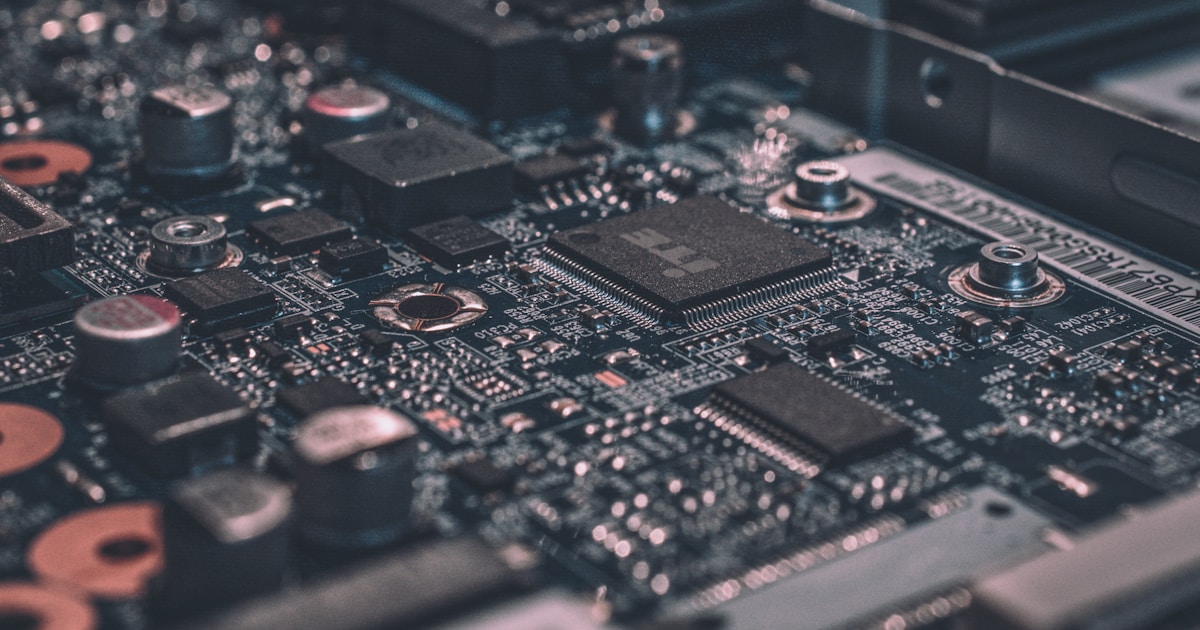
Here's the question that should genuinely drive this entire buying decision: are you running a model, or are you running an LLM specifically? Object detection, TinyML, and computer vision have modest, well-understood hardware requirements this series has already covered in depth. But local LLM inference has one dominant constraint nobody else's advice fully prepares you for: memory capacity beats CPU speed, GPU brand, and every other spec combined.
This closes out the hardware side of this series by zooming out from single-board Linux computers (Raspberry Pi, Jetson) to the broader category including full x86 mini PCs — genuinely relevant now that running a 7B-13B local LLM at home has become a mainstream ambition rather than a niche hobbyist pursuit.
By the end of this guide, you'll know exactly which tier of hardware fits your actual project, with concrete numbers instead of marketing TOPS figures. IMO, the community consensus on this one is genuinely consistent across every serious discussion of the topic — memory matters more than almost anything else people obsess over :)
The Two Genuinely Different Categories
Before any specific recommendation, understand that "AI hardware" here splits into two categories with different design goals entirely.
- Single-board computers (SBCs) — Raspberry Pi, Jetson, Radxa, Khadas — integrate CPU, RAM, storage, and I/O onto one non-upgradeable board, built for embedded projects, robotics, and edge deployment where GPIO pins and camera interfaces genuinely matter.
- Mini PCs — Beelink, GEEKOM, Minisforum, Mac mini — are genuinely full x86 (or Apple Silicon) computers in a compact case, built for running actual desktop workloads including local LLM inference, with upgradeable RAM/storage and no embedded I/O pretensions.
If your project needs GPIO, camera modules, or genuinely tiny form factor and power draw, stay in SBC territory — everything the Raspberry Pi and Jetson tutorials earlier in this series covered. If your project is specifically "run a local LLM or generate images at home," a mini PC is very likely the better fit — this article's genuinely new territory.
Mini PCs for Local LLMs: Memory Is the Whole Game
Community consensus across r/LocalLLaMA, r/MiniPCs, and r/homelab is remarkably consistent on this single point: memory matters more than CPU or brand. This directly connects to the quantization and GGUF articles from earlier in this series — a quantized model has to actually fit in RAM before any of that quantization work pays off.
The Realistic Numbers for Mid-Range Mini PCs
Machines like the Beelink SER9 (Ryzen 9 7940HS), GEEKOM A6 (Ryzen 5, 16-32GB), or MSI Cubi NUC AI+ (Intel Core Ultra, 32GB) represent the genuinely popular mid-range tier — real capable CPUs, but memory bandwidth and capacity set the actual ceiling on what runs well.
- A 7B quantized model (Llama 3 8B Q4_K_M, Mistral 7B — recall the GGUF quantization tags from earlier in this series) runs at roughly 15-20 tokens/second on these machines — genuinely usable for interactive chat.
- A 13B model is technically possible on a 32GB unit, but expect speeds dropping to 5-10 tokens/second — noticeably sluggish for real-time conversation.
- Anything above 13B either won't fit or runs too slowly to be practical on this mid-range tier — this is the genuine ceiling, not a pessimistic estimate.
The RTX 5070 and RTX 5080 remain the desktop GPU benchmarks for this workload — a mini PC with dedicated GPU access via OCuLink or Thunderbolt can approach discrete-GPU performance for Ollama and llama.cpp workloads.
The High-End Option: AMD Ryzen AI Max+ 395
If local LLM work is genuinely your primary goal rather than a side interest, the Ryzen AI Max+ 395 platform (found in machines like the ACEMAGIC M1A PRO+) represents the current top consumer tier for this specific use case.
- 50 TOPS from the integrated NPU alone, with total platform AI performance (CPU+GPU+NPU combined) reaching up to 126 TOPS.
- 64GB+ RAM configurations are genuinely the target spec here — this is what actually lets larger, more capable quantized models fit and run at usable speeds.
- Power consumption stays genuinely modest — 15W idle to 85W under load, dramatically lower than a discrete-GPU desktop tower running equivalent workloads.
One genuinely important caveat worth flagging clearly: NPU acceleration doesn't map well onto autoregressive LLM token generation as of 2026 — frameworks like ONNX Runtime and DirectML are still developing NPU support for this specific workload. Plan around RAM and GPU/compute capability today; treat the NPU spec as future-proofing that may pay off in 2027 and beyond, not a number to weight heavily in your immediate buying decision.
A Genuinely Useful Upgrade Path: OCuLink
Worth knowing specifically if you're buying budget-tier now but might want more power later: some budget mini PCs include an OCuLink port, opening a future upgrade path to an external GPU without replacing the entire machine. Check for this specifically if you're not ready to commit to the high-end tier immediately — it genuinely changes a mini PC from a fixed-ceiling purchase into one with real headroom.
Noise and Power: Practical Considerations Beyond Raw Specs
- Most AMD-based mini PCs land in the 30-42 dBA range under sustained AI load — roughly whisper to quiet-conversation volume; some Intel NUC models reach 45 dBA. A discrete-GPU desktop tower under equivalent load sits at 45-55 dBA, genuinely noticeably louder.
- If noise is a real priority, Mac mini genuinely wins — worth checking specific reviews for sustained inference noise on any Windows/Linux alternative you're considering.
- At the US average electricity rate, a 15W mini PC costs roughly $21/year to run continuously; a 65W unit runs about $91/year — genuinely modest operating costs regardless of which tier you choose, unlike a discrete-GPU desktop under sustained load.
Single-Board Computers: The Non-LLM AI Project Tier
For everything this series' edge AI arc actually covered — TinyML, object detection, robotics, computer vision — SBCs remain the right category, and the field has genuinely expanded beyond just Raspberry Pi and Jetson.
Raspberry Pi 5 (8GB) — The Default All-Rounder
Consistently ranked the overall top choice across current buyer's guides specifically for combining power, affordability, and the massive community/documentation advantage covered in this series' Raspberry Pi tutorials already.
The Raspberry Pi 5 8GB remains the default recommendation for this series' projects — TinyML, YOLO object detection, and the Raspberry Pi ML tutorial all work directly on this hardware.
NVIDIA Jetson Orin Nano — The AI-Specific Powerhouse
Recommended specifically for AI/ML and advanced embedded projects needing genuine GPU-accelerated inference — exactly the platform this series' Jetson tutorial covered in depth, still the right answer when the workload genuinely demands CUDA and TensorRT rather than CPU-bound inference.
Khadas VIM3 — The Dedicated NPU Option
Powered by the Amlogic A311D, combining Cortex-A73/A53 cores with an onboard NPU running up to 5.0 TOPS, supporting TensorFlow and Caffe directly — genuinely solid for edge AI inference without needing a full GPU, positioned as a middle ground between Pi's general-purpose CPU and Jetson's heavier GPU-centric design.
Radxa Rock 5C / Orange Pi 5 Plus — The Value Performance Tier
Built around the Rockchip RK3588S, these deliver genuinely strong overall performance — eight cores, NVMe support, upgradeable RAM in some configurations — at meaningfully lower cost than Jetson-tier hardware, a solid choice for budget-conscious builders wanting desktop-like flexibility without the full Jetson price tag.
Radxa Orion O6N — The New Higher-End Entrant
A genuinely notable July 2026 addition: a Nano-ITX SBC with a DynamIQ 12-core processor, Immortalis GPU, and up to 64GB of LPDDR5 RAM — a less expensive variant of the earlier Orion O6 mini-ITX board, worth watching as SBCs continue pushing toward genuinely desktop-class specs in compact footprints.
Quick Comparison Table
| Device | Category | Best For | Key Constraint |
|---|---|---|---|
| Raspberry Pi 5 (8GB) | SBC | General edge AI, learning, this series' projects | CPU-bound, needs accelerator for real-time vision |
| NVIDIA Jetson Orin Nano | SBC | GPU-accelerated vision, generative edge AI | Cost, embedded-specific setup |
| Khadas VIM3 | SBC | Dedicated NPU inference, media + AI combo | 5 TOPS ceiling |
| Radxa Rock 5C / Orange Pi 5 Plus | SBC | Budget desktop-like performance | Less mature ecosystem than Pi |
| Mid-range mini PC (Ryzen 7/Core Ultra, 32GB) | Mini PC | 7B local LLMs, everyday computing | 13B+ models get sluggish |
| Ryzen AI Max+ 395, 64GB+ | Mini PC | Serious local LLM/image-gen work | Price, NPU underutilized for LLMs today |
Matching Hardware to This Series' Projects
- TinyML, Arduino-tier projects → stay in the microcontroller category from the edge AI hardware guide; none of this article's hardware is the right fit.
- Raspberry Pi classification/YOLO tutorials → Raspberry Pi 5 or Orange Pi 5 Plus for a budget-conscious alternative with similar capability.
- Jetson generative AI / TensorRT work → Jetson Orin Nano remains correct; nothing here replaces it for genuine GPU-accelerated edge inference.
- Local LLM / Ollama / RAG chatbot projects from this series' local AI arc → this is genuinely where the mini PC category becomes relevant for the first time — none of the SBCs in this article realistically run a 7B model at usable speed the way even a mid-range mini PC does.
Common Mistakes People Make
- Buying an SBC for local LLM work. Even a powerful SBC like Jetson Orin Nano's 8GB is genuinely limiting for LLM-specific workloads compared to a mini PC's 32-64GB RAM ceiling — match the hardware category to the actual workload.
- Prioritizing NPU TOPS figures for LLM shopping in 2026. As covered above, autoregressive token generation doesn't map well to current NPU architectures — RAM capacity and GPU/CPU compute matter more today.
- Assuming SBC and mini PC are interchangeable for AI projects. They solve genuinely different problems — GPIO/embedded integration versus general-purpose compute — and picking the wrong category means fighting your hardware's fundamental design.
- Underestimating RAM needs for local LLMs. A 13B model on 32GB technically runs but at a noticeably degraded 5-10 tokens/second — plan RAM headroom generously if you want genuinely comfortable interactive speeds.
- Ignoring OCuLink availability on a budget mini PC purchase. This is genuinely the cheapest form of future-proofing if you're not ready to commit to the high-end tier immediately.
Wrapping This Up
Choosing hardware for AI projects in 2026 genuinely splits into two questions: is this an embedded/edge project needing GPIO and tight power budgets (stay in SBC territory — Raspberry Pi, Jetson, Radxa), or is this specifically about running local LLMs and image generation (move to mini PC territory, where RAM capacity dominates every other spec)? The community consensus on the LLM side is remarkably consistent — memory matters more than CPU brand or NPU TOPS figures, at least for the autoregressive workloads dominating local LLM use today.
Remember that a 7B quantized model at 15-20 tokens/second is the realistic mid-range mini PC experience, and that NPU acceleration remains more future-proofing than practical LLM speedup as of 2026. FYI, this genuinely completes the hardware arc running through this whole series — from Arduino's kilobytes through Raspberry Pi's moderate capability, Jetson's GPU-accelerated edge tier, and now mini PCs for the specific case of wanting genuine local LLM capability at home :)
Now go check whether your actual project needs GPIO pins and embedded I/O, or just RAM and raw compute — that one question sorts you into the right half of this entire buying guide faster than comparing any two spec sheets side by side.