Contents
Every environment you've trained on so far — CartPole, Snake, even Atari — runs on simplified physics or none at all. MuJoCo is where that changes. This is real contact dynamics, real friction, real inertia — the same physics engine researchers use to train robots that actually work when the simulation ends and the real hardware takes over.
I came to MuJoCo specifically after hitting the ceiling of what Gymnasium's classic control environments could teach me — CartPole doesn't have anything meaningful to say about a robot arm figuring out how to grip an object without crushing it. Ever wondered what actually powers those "robot learns to walk" videos from DeepMind and OpenAI? This is usually the answer.
By the end of this tutorial, you'll understand what MuJoCo actually is, how it plugs into Gymnasium, and you'll have trained your first policy on a real physics-based locomotion task. IMO, watching a simulated four-legged robot go from collapsing instantly to actually walking is a genuinely different tier of satisfying compared to CartPole :)
What MuJoCo Actually Is
MuJoCo stands for Multi-Joint dynamics with Contact — a physics engine purpose-built for robotics, biomechanics, graphics, and anywhere fast, accurate simulation of physical contact matters. It's not a general game engine repurposed for robotics; it was designed from the ground up specifically for optimization through contact dynamics.
Originally developed as a commercial research tool, DeepMind acquired it in October 2021 and open-sourced it in 2022, making it free for everyone. Written in C++ with a Python API, giving you near-native simulation speed without writing C++ yourself. Models friction, inertia, elasticity, and joint dynamics with genuine physical accuracy, not simplified approximations.
This accuracy is exactly the point. A policy trained against unrealistic physics learns unrealistic solutions — MuJoCo's whole value proposition is letting you rigorously test RL algorithms in simulation before ever risking real hardware.
MuJoCo vs. the Physics Engines You've Used Before
If you've touched PyBullet or a game engine's physics system, MuJoCo will feel like a step up in both realism and complexity.
PyBullet is lighter-weight and faster to get running — a genuinely reasonable choice for simple locomotion tasks or early prototyping. MuJoCo trades some of that simplicity for significantly more accurate contact modeling, which matters enormously for anything involving grasping, walking, or precise manipulation. Since version 3.0, MuJoCo includes GPU-accelerated simulation via MJX, letting you run thousands of parallel simulations for dramatically faster RL training.
My honest take: start with PyBullet if you just want basic locomotion working quickly. Move to MuJoCo once contact accuracy and sim-to-real transfer genuinely matter for your project.
If you're coming from our earlier tutorials, our Gymnasium guide covers the core API that MuJoCo plugs into — reset(), step(), observation and action spaces — so the actual new learning here is about physics and continuous control, not new syntax.
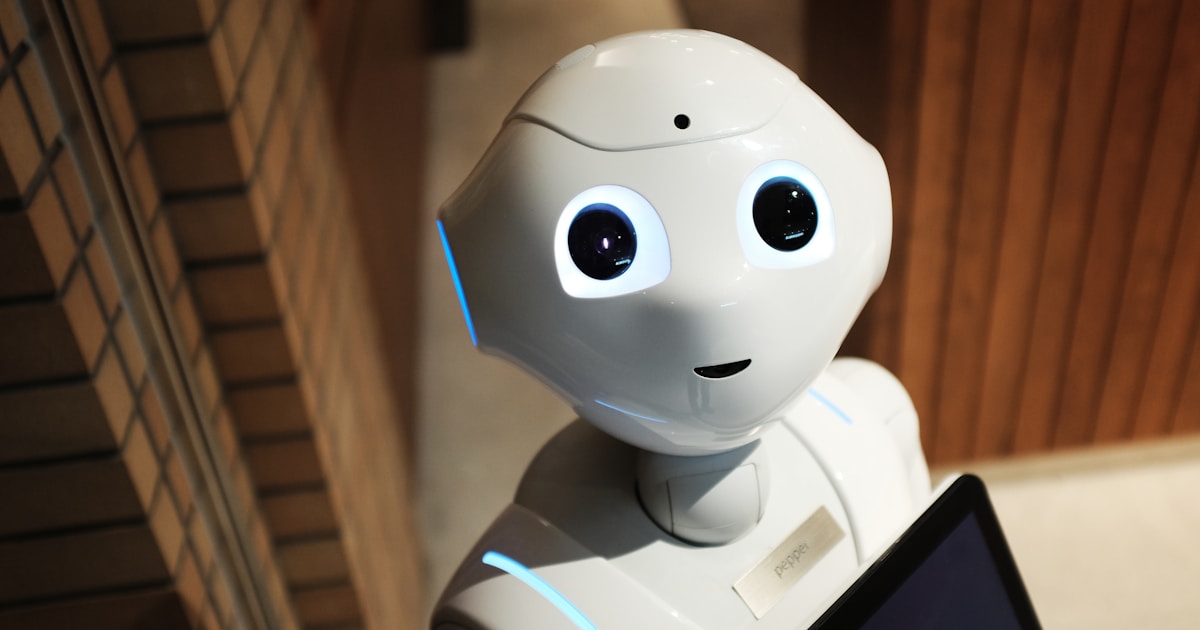
Figure 1: MuJoCo simulates contact dynamics, friction, and joint physics accurate enough for real sim-to-real robot deployment
Installing MuJoCo
The good news here: MuJoCo is now a pure Python package — no separate license keys, no fiddly system dependencies to hunt down.
conda create -n mujoco-tut python=3.11
conda activate mujoco-tut
pip install mujoco gymnasium gymnasium-robotics
That gymnasium-robotics package is what actually connects MuJoCo to the Gymnasium API you already know — it's a Farama Foundation library specifically containing RL robotics environments that run on the MuJoCo physics engine using its maintained Python bindings.
Your First MuJoCo Environment Through Gymnasium
Since you already know Gymnasium's core API, plugging into a MuJoCo-backed environment requires almost no new syntax.
import gymnasium as gym

env = gym.make("Ant-v5", render_mode="human")
observation, info = env.reset(seed=42)

for _ in range(1000):
    action = env.action_space.sample()
    observation, reward, terminated, truncated, info = env.step(action)

    if terminated or truncated:
        observation, info = env.reset()

env.close()
Ant-v5 is a four-legged simulated robot that needs to learn to walk — genuinely one of the most common entry points into MuJoCo-based RL. Notice the API is identical to CartPole's — reset(), step(), checking terminated or truncated — that consistency is exactly why learning Gymnasium's core interface first pays off here.
Why MuJoCo Environments Are Harder Than Classic Control
MuJoCo environments are generally more difficult to solve via policy than the simpler environments you've trained on before, and it's worth understanding why upfront.
Continuous, high-dimensional action spaces — instead of "left or right," you're now controlling multiple joint torques simultaneously. Contact dynamics are genuinely chaotic — small changes in force or timing can produce very different physical outcomes. Reward shaping matters enormously — naively rewarding "distance traveled" without considering energy efficiency or stability produces agents that technically move but look nothing like walking.
For a deeper understanding of how these challenges affect algorithm choice, our evaluating reinforcement learning algorithms guide covers the metrics and methods used to assess continuous-control performance.
Training Your First Policy: Ant-v5 with PPO
DQN, which handled CartPole and Snake fine, genuinely struggles with continuous action spaces like MuJoCo's joint controls. This is where PPO (Proximal Policy Optimization) becomes the standard choice — it's built to handle continuous control naturally and has become the default for stability in robotics RL specifically.
import gymnasium as gym
from stable_baselines3 import PPO

env = gym.make("Ant-v5")

model = PPO("MlpPolicy", env, verbose=1)
model.learn(total_timesteps=100_000)
model.save("ant_ppo")
100,000 steps is genuinely just a demo-scale run — enough to see basic locomotion behavior emerge, not enough for a genuinely proficient walking gait. Real training runs on MuJoCo locomotion tasks typically go well beyond this for serious results.
Watching Your Trained Policy
model = PPO.load("ant_ppo")
env = gym.make("Ant-v5", render_mode="human")

observation, info = env.reset()
for _ in range(1000):
    action, _ = model.predict(observation)
    observation, reward, terminated, truncated, info = env.step(action)
    if terminated or truncated:
        observation, info = env.reset()

env.close()
The difference between the random-action version and this trained version is genuinely stark — early training looks like a robot having a seizure; a reasonably trained policy looks like an actual, if slightly ungainly, walking gait.
The Environments Worth Knowing
Gymnasium-Robotics and the broader MuJoCo ecosystem cover a genuinely wide range of tasks, organized roughly by difficulty.
Ant, HalfCheetah, Hopper — locomotion tasks with increasing degrees of freedom and balance challenges; good starting points after classic control. Humanoid — significantly harder, full bipedal locomotion with many more joints to coordinate simultaneously. Adroit Arm — manipulation tasks using a simulated dexterous hand, covering things like hammering a nail, opening a door, or twirling a pen. Maze environments — navigation tasks where an agent needs to find its way to a goal position across mazes of increasing difficulty. MaMuJoCo — multi-agent factorizations of standard MuJoCo tasks, for anyone interested in cooperative or competitive multi-robot learning.
Don't jump straight to Humanoid. Ant and HalfCheetah teach the same fundamental lessons about continuous control and reward shaping with dramatically less training time required.
If the robotics angle interests you, our robotics simulation hardware guide covers the physical kits — ELEGOO, PiCar-X, MyCobot Pro 630 — you'd need to bridge from MuJoCo simulations to real hardware.
MJX: When You Need Serious Speed
If you find yourself needing to run thousands of parallel simulations for faster training — genuinely common in modern RL research — MJX is MuJoCo's GPU-accelerated variant, implemented in JAX.
# Conceptual — MJX enables vectorized physics via jax.vmap
# allowing mjx.step to run in parallel across many simulation instances
MJX pairs naturally with Brax, a JAX-based RL training library, letting you train policies like a forward-running Humanoid using massively parallel physics steps rather than one simulation at a time. This is genuinely more advanced setup than you need starting out, but it's worth knowing it exists once single-environment training starts feeling too slow.
For GPU recommendations if you plan to train at scale, our best GPUs for deep learning guide covers what actually matters for MuJoCo and physics simulation workloads.
The Bigger Picture: Sim-to-Real With MuJoCo
Here's why all this simulation accuracy actually matters beyond just training speed: projects like MuJoCo Playground have demonstrated genuine zero-shot sim-to-real transfer — training entirely in simulation, then deploying directly onto real hardware like the Unitree Go1/G1 quadrupeds or a Franka robotic arm, without additional real-world fine-tuning.
That's the entire promise of physically accurate simulation: get the physics close enough to reality, and the policy your agent learns in a completely safe, cost-free simulated environment actually works when it hits real motors and real friction. That's a genuinely different level of practical value than a CartPole demo.
Our beginner's guide to RL for games and robotics explains the sim-to-real gap in plain language — why simulation-trained policies fail on real hardware and how domain randomization bridges that gap.
Common Mistakes People Make
I've hit a few of these myself while getting comfortable with MuJoCo specifically.
Jumping straight to Humanoid or manipulation tasks. Ant and HalfCheetah teach the same continuous-control fundamentals with dramatically shorter training times. Using DQN instead of a continuous-control algorithm. DQN expects discrete actions; MuJoCo's joint torque controls need PPO, SAC, or similar continuous-action algorithms. Underestimating reward shaping complexity. A naive "move forward" reward can produce agents that technically satisfy the metric while looking nothing like actual locomotion. Expecting CartPole-level training speed. MuJoCo locomotion tasks genuinely need more training steps and more careful hyperparameter tuning than classic control problems. Skipping MJX/parallel simulation when training gets slow. If single-environment training feels painfully slow, that's usually the signal to explore vectorized or GPU-accelerated simulation rather than just waiting longer.
Wrapping This Up
MuJoCo brings genuinely accurate physical simulation into your RL toolkit — friction, contact dynamics, and joint physics realistic enough to support real sim-to-real transfer, not just toy demonstrations. The Gymnasium API you already know plugs directly into it, so the actual new learning curve is about continuous control and reward shaping, not new syntax.
Remember to start with Ant or HalfCheetah before attempting Humanoid or manipulation tasks, and reach for PPO rather than DQN once you're dealing with continuous joint controls. FYI, the same underlying physics engine powering hobbyist Ant-v5 experiments is genuinely the one behind serious sim-to-real robotics research happening right now :)
Now go watch your Ant collapse in every possible direction before it eventually learns to walk. That messy middle stretch of training is genuinely where you'll understand reward shaping better than any explanation could teach you.